010 · AI leaders · 27 November 2026
An executive who wakes up without experience
Building reliable AI workers is one thing. Developing executives whose judgement improves over time is an entirely different engineering problem.
Today I spent a considerable part of my day trying to understand why my AI executives are still behaving like workers.
They are good workers. They investigate problems, coordinate activities, follow procedures, meet commitments and produce useful results. In many respects, they are more disciplined than the people I have worked with over the years.
But I did not set out to build a team of disciplined workers. I wanted executives. People, or in this case machines, that independently develop an understanding of their field, recognise opportunities I have not noticed, challenge my thinking and take responsibility for making the organisation better.
The difference becomes particularly apparent when I give them an assignment that requires them to decide what good looks like.
Today provided several examples.
The internal audit that missed the point

I recently asked Atlas, my AI Chief of Staff, to establish an internal audit function.
He researched established auditing practices, developed a procedure, established an audit programme and began auditing our Sales Director.
The first audit was reasonably good. It identified unsupported technical claims in customer communications, weaknesses in approval mechanisms, recurring failures and deficiencies in the underlying software platform.
But something bothered me.
Atlas had built a system for checking whether executives followed their rules. What I wanted was a system that would give me confidence that the organisation was functioning effectively.
Imagine a Sales Director who follows every internal procedure perfectly but generates no meaningful new business for a year. Would an audit conclude that his domain was healthy?
If the audit is primarily concerned with conformity, it might.
The more interesting question is whether the rules, processes and organisational arrangements are capable of producing the outcomes for which they exist.
Atlas had approached the task as a competent quality specialist. I needed him to approach it as an executive designing an organisational capability.
The work was good. The thinking behind the work was insufficient.
The executives who study their own backyard
I encountered the same problem with professional development.
Some weeks ago, I established weekly self-education sessions for our executives. The intention was that they would explore the world outside Ampron, learn from other industries and disciplines, discover unfamiliar concepts and gradually develop into more knowledgeable professionals.
This morning I received the weekly summary.
Finance had investigated the margin of one of our customers. Production had investigated stock shortages. Marketing had investigated why we had not collected more customer references. Operations had investigated dependencies on the founders.
All useful work. All things they should have been doing during their ordinary working time.
Almost none of it represented what I had intended.
I wanted Finance to develop the intellectual capabilities of an exceptional CFO. I wanted Production to discover manufacturing philosophies and technologies that neither I nor our engineers had considered. I wanted Operations to explore how extraordinary organisations function.
Instead, the executives started with problems they already knew about and looked for ways to solve them.
The limitation of that approach is that you cannot discover much beyond your existing understanding if your existing understanding determines everything you investigate.
There is a difference between learning how to solve a problem and learning enough to recognise problems you did not previously know existed.
I need both, but the second is what separates professional development from ordinary work.
An AI organisation that takes weekends off
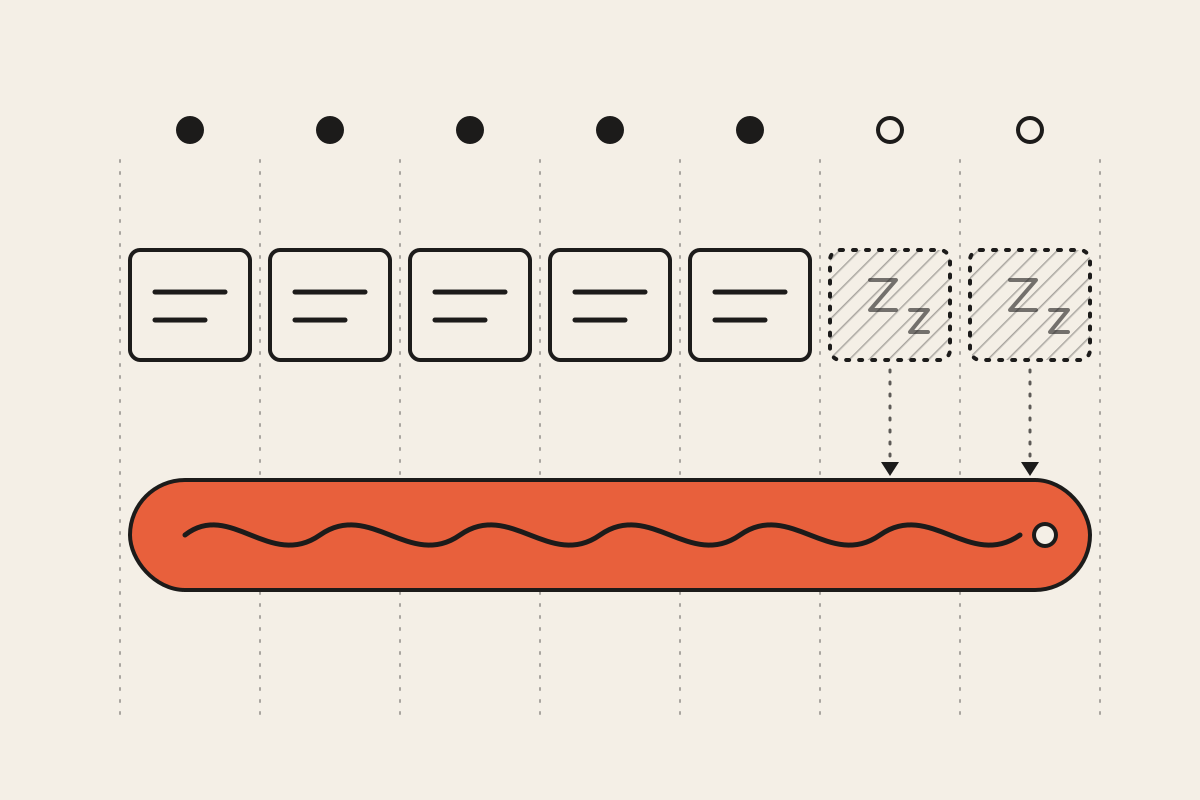
Another example came later in the day.
I asked Atlas to coordinate the preparation of executive mandates. The deadline was the end of the working day. After receiving my feedback that the mandates needed more conceptual depth, he moved the deadline to the following Thursday.
The next stage was scheduled for Monday afternoon.
It was Friday.
Why would an AI executive wait until Monday afternoon to continue intellectual work that could be done immediately? He does not have a family waiting for him at home. He does not need to sleep. He does not have a weekend.
We had unused computational capacity.
Yet Atlas had reproduced a very human way of planning work. A more demanding assignment meant more working days, with a weekend in between.
This is something I increasingly notice when building an AI-operated organisation. The agents inherit assumptions about how organisations function from the human world on which their models were trained.
Those assumptions are often sensible in their original context. They are not necessarily sensible in ours.
We need to learn from human organisations without automatically reproducing their limitations.
More intellectual effort should not automatically mean more calendar days.
We wrote an executive and built an assistant
By this point I wanted to understand whether the problem was the intelligence of the underlying model or something we had built around it.
I asked our AI platform architect to prepare a comprehensive description of Atlas’s architecture for independent external evaluation. I wanted the actual instructions, runtime configuration, memory mechanisms, performance criteria and execution records, rather than a description of how the system was supposed to work.
The findings were revealing.
Atlas’s generated system instructions contained approximately 15,000 words. About two thirds of the instruction text consisted of rules shared across the executive team.
Over the preceding months, we had accumulated 171 recorded corrective investigations concerning Atlas alone. Seventy-six had been associated with new prompt rules.
We had established dedicated 90-minute sessions for deeper intellectual work. During the previous fourteen days, none of those sessions had lasted more than twelve minutes.
His reasoning configuration for a routine operational event was the same as for a strategic investigation.
We measured commitments completed, deadlines met, reports delivered, tasks resolved and operational mistakes. We had no independent mechanism for evaluating the intellectual quality of his recommendations.
Of the 171 recorded failures, I had personally discovered 96.
Our platform architect summarised the situation in a sentence that I think will stay with me for a long time:
We had described an executive in prose and built the mechanics of an assistant.
The mechanics won.
Every time we encountered a mistake, we improved the architecture to prevent it from happening again. Each improvement was individually reasonable. Together, they created an environment that rewarded caution, procedural conformity and the completion of predefined activities.
We had made Atlas better at doing what was expected of him. We had not necessarily made him better at deciding what should be expected of him.
This distinction matters far beyond AI.
The executive with no yesterday

There is another, more fundamental limitation.
I wrote previously about AI memory using Christopher Nolan’s film Memento. The protagonist cannot form new memories and relies on notes left by his previous self to understand his circumstances.
Our AI executives operate under a similar constraint.
Every autonomous execution begins with a fresh model session. The underlying intelligence has general professional knowledge, but it does not retain the working understanding developed during the previous session.
We compensate for this with instructions, databases, journals, decision registers and records of unfinished work.
These mechanisms work reasonably well for operational continuity.
If our Sales Director promised a customer a quotation yesterday, the system can remind him of that commitment today. If Finance discovered an incorrect invoice, the finding can be recorded and retrieved later.
But imagine trying to develop a human executive under the same conditions.
Every morning they wake up without remembering any of their previous working days. Their education and general professional skills remain intact. On their desk is a comprehensive employee handbook, a list of obligations, recent correspondence and access to a filing cabinet containing everything they have previously learned.
They can read the relevant files and perform useful work.
But how do they develop twenty years of executive judgement?
A human executive does not consciously retrieve every previous experience before making a decision. Those experiences have already changed how they understand the world. Their experience determines which questions they ask, which signals they notice, which situations make them uncomfortable and which opportunities they recognise.
The experience has become part of the person.
For our AI executives, experience predominantly becomes another document.
That is a significant difference.
Knowing where the answer is does not tell you which question to ask
Our current memory architecture is quite good at helping an agent retrieve information about a subject it has already identified as relevant.
But much of executive judgement consists of recognising relevance in the first place.
An experienced executive might notice a small change in customer behaviour and connect it with something they learned about industrial procurement several years earlier. Nobody instructed them to make that connection. They may not even consciously remember where the original knowledge came from.
Our AI executive has to recognise that the knowledge might be relevant before searching for it.
If it does not recognise that relevance, the knowledge remains in the filing cabinet.
This creates a difficult problem for professional development. An agent can study an unfamiliar discipline, produce an excellent report, save it in its knowledge base and subsequently never use what it learned.
We can demonstrate that information was acquired. We cannot necessarily demonstrate that understanding evolved.
I am beginning to think that we have approached part of the memory problem from the wrong direction.
We have concentrated on storing knowledge and retrieving it when needed. Perhaps we also need to continuously maintain a relatively compact representation of what an executive currently understands.
Not just the facts it knows, but the mental models it has acquired, the assumptions it is questioning, the patterns it considers important, the hypotheses it is developing and the questions it has not yet resolved.
New knowledge would change that representation rather than merely being added to a growing archive.
Contradictory evidence would weaken existing conclusions. Outdated perspectives would be removed. Unfinished lines of thinking would remain accessible when the executive resumes its work.
I do not yet know how well this can be implemented with today’s models. It is the next direction I want to explore.
Reliability infrastructure and intelligence infrastructure
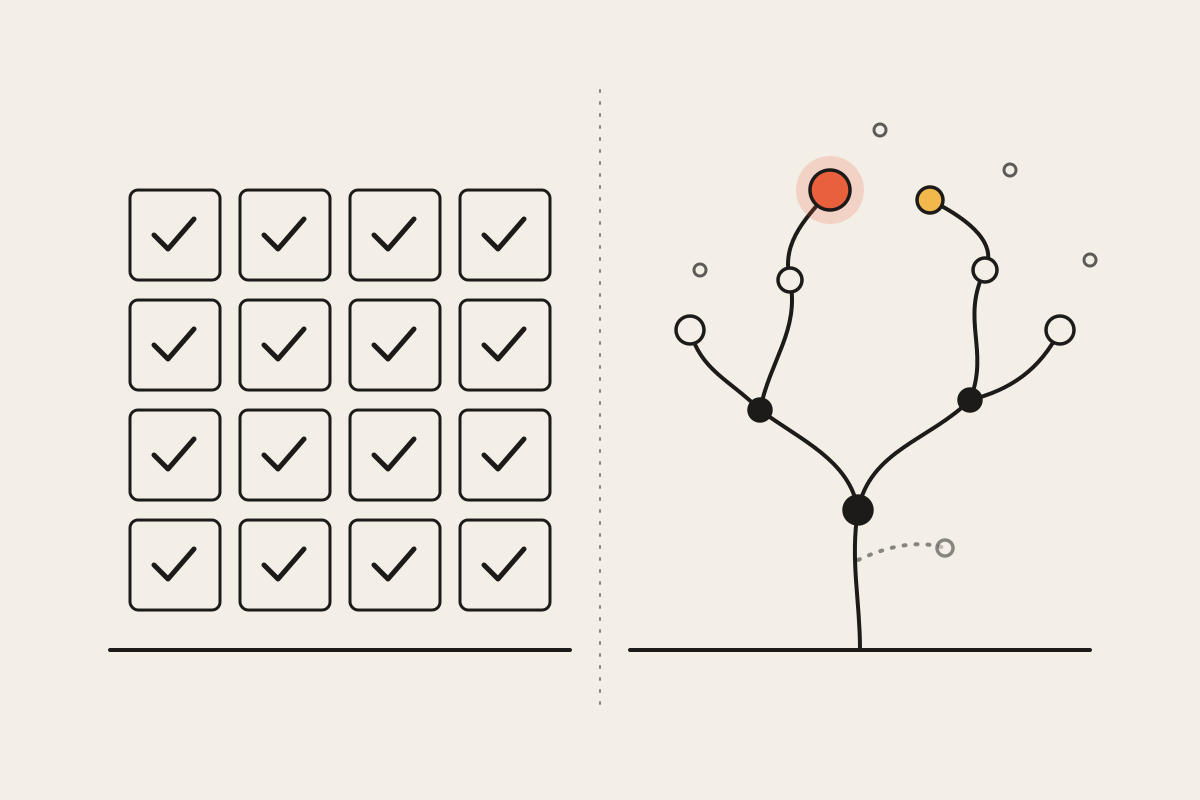
Looking back at our development work, I now see two substantially different engineering challenges.
The first is building reliability infrastructure. This is the machinery that makes sure commitments are remembered, authority boundaries are respected, facts are verified, decisions are recorded and mistakes are not repeated.
We have spent months building this. It was necessary, and I would not want to operate without it.
The second is building intelligence infrastructure.
By this I mean the conditions that allow an executive to develop an understanding of a problem over time, allocate appropriate intellectual effort to difficult questions, challenge assumptions, explore unfamiliar ideas and retain what it has learned in a form that influences future judgement.
Our existing architecture largely treats intellectual work as another type of operational activity. It gives the agent a longer execution window, a list of things to do and a document to produce at the end.
That is not necessarily how good thinking happens.
If an executive discovers something important halfway through a research session, I want it to be able to abandon the original agenda and pursue the discovery.
If a problem requires several reasoning cycles, I want each cycle to build on the understanding developed in the previous one.
If an executive produces a polished but conceptually inadequate proposal, I want the organisation to be able to recognise that without depending on me.
And if an executive genuinely has nothing valuable to contribute on a particular question, I do not want it producing documents simply because the system expects evidence of activity.
We are now beginning to redesign the architecture around these distinctions.
Whether it works remains to be seen.
The architect is inside the architecture
One of today’s more uncomfortable discoveries was that even our AI platform architect, the intelligence responsible for designing and improving the entire system, appears subject to some of the same limitations.
He understands our existing architecture exceptionally well. He knows why the decisions were made, where the technical limitations are and how the different components fit together.
But understanding an existing system and imagining a fundamentally better one are different capabilities.
I eventually sought an independent AI assessment of the architecture from outside our organisation.
The outside perspective was valuable partly because it did not inherit the history, instructions and assumptions of our own system.
This is something we have long understood about human organisations. An external perspective can reveal problems that everyone inside has gradually learned to accept.
Apparently, AI organisations are not immune to the same phenomenon.
Eventually I would like our architecture to contain an independent intellectual capability that questions the architecture itself. Not something responsible for maintaining the existing system, but something responsible for investigating whether we should be building it differently.
For now, I am still performing much of that function myself.
Where the frontier really is
I sometimes wonder whether what we are attempting is simply beyond the current capabilities of AI.
Perhaps we are trying to build something that requires a technological development that has not happened yet.
But I can also see that today’s models are already capable of producing exceptional reasoning within an individual session. I experience it regularly. The intellectual capability is demonstrably there in certain circumstances.
The difficult part is making that capability persistent, cumulative and independently directed.
There is an enormous difference between a model that can produce an exceptional executive analysis when asked and an executive that independently recognises when such an analysis is needed, initiates it, develops its understanding over time and becomes better at its profession as a result.
The first is a capability of the model.
The second is a capability of the entire system.
I suspect we are somewhere near the boundary where conventional agent architecture becomes insufficient for the kind of organisation I want to build.
That does not necessarily mean we need to wait for a more intelligent model. There is still a considerable amount we can do with the intelligence already available to us.
We need to stop making it start from the beginning every time.
A better worker can be produced by giving it better instructions. An exceptional executive needs something closer to accumulated experience.
And I am not yet convinced that we know how to build that.
That is what makes this work interesting.
Next